Node.js Security Release: HIGH-Severity Fixes Due
The Node.js security release of 11 November 2026 fixes a HIGH-severity issue in 22.x, 24.x and 26.x. See who is affected and what to ask your developer.
Updated: 14 November 2026
The Node.js security release scheduled for Wednesday, 11 November 2026 fixes issues rated up to HIGH severity in the 26.x, 24.x and 22.x lines. If your website, API, WhatsApp bot or web app runs on Node.js, ask your developer to check the version today and plan an upgrade as soon as the patched versions appear.
Many business owners do not know what their site runs on, because an agency or freelancer built it. This guide explains what the Node.js team has said so far, who should act, and the simple questions to ask this week.
What did the Node.js team announce?
Node.js is the runtime that powers a large share of modern websites, APIs and backend tools. According to the official Node.js security announcement, the project will release new versions of the 26.x, 24.x and 22.x release lines on or shortly after Wednesday, 11 November 2026. The notice says the highest severity issue fixed in this release is HIGH in each of those three lines.
The announcement also says that End-of-Life versions are always affected when a security release occurs. For those versions, the only remedy it points to is using an up-to-date version.
What do we not know yet?
At the time of writing, the pages we read are an advance notice. They do not list CVE numbers, the number of bugs, the exact patched version numbers or a description of each flaw. Third-party coverage dated 4 and 5 November 2026 says the same: the project normally keeps details back until the fixed versions are out.
That is why it is wise not to guess how serious the problem is for your own site. Wait for the official release notes, then confirm with your developer which fixes apply to the features your project actually uses.
Is my business website affected?
Only sites and tools that run on Node.js are in scope. A site built on WordPress or plain PHP does not run on Node.js, although it may use Node.js tools during development. Websites built with frameworks such as Next.js, Express or similar usually do run on it, and so do many chatbots, payment webhooks and automation scripts.
- Node.js 22.x, 24.x or 26.x: these lines are named in the announcement, so expect a patched version for each.
- Older or End-of-Life versions: the official notice says these are always affected, and one of the articles we read says Node.js 20 or older should not expect a fix. Plan a move to a supported line.
- Not sure what you run: ask your developer or hosting provider to run `node -v` on the server and to check the Node version in your Dockerfile or hosting settings.
What should I ask my developer to do?
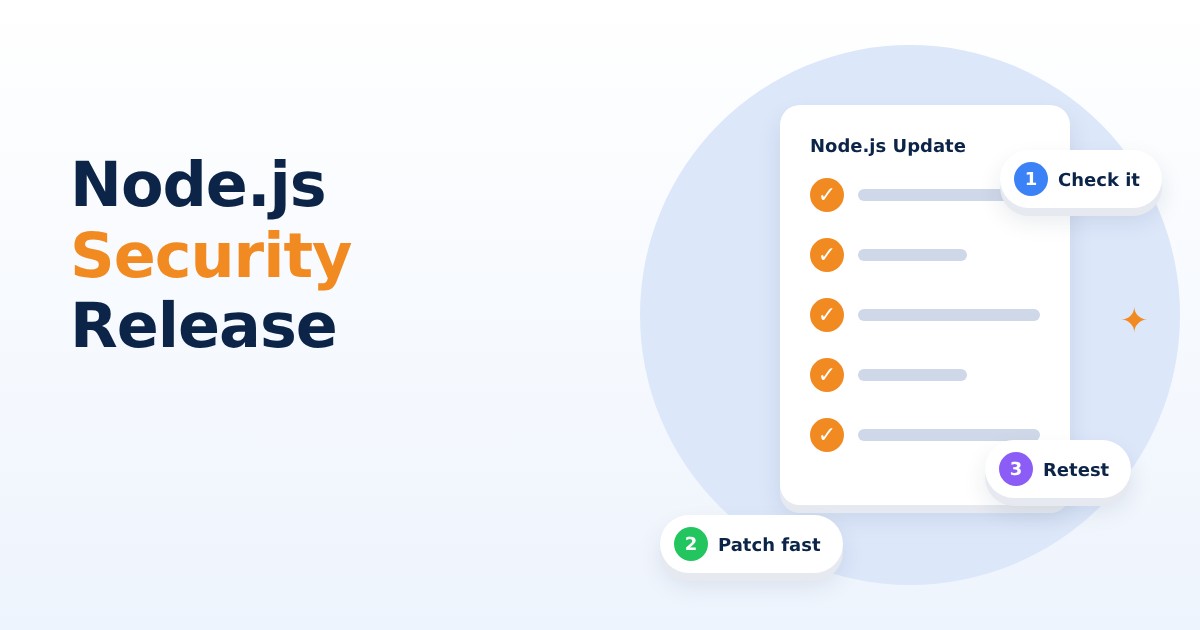
You do not need to read the technical details. A short checklist is enough, and it matches the advice in the coverage we read:
- Check which Node.js version runs on your live server, your staging copy and your build or CI tools.
- Keep 11 and 12 November free for a quick update, because the notice says releases may appear on or shortly after the 11th.
- When the new versions are published, update, rebuild any Docker images and redeploy.
- Test the important flows after the update: login, forms, payments, WhatsApp or email notifications and admin pages.
- If the site is on an End-of-Life version, schedule a move to a supported LTS line instead of waiting.
Why should a small business care about one HIGH-severity rating?
A HIGH rating means the Node.js team considers at least one issue serious, though it has not yet explained how. Leaving a known issue unpatched on a public website or API can put customer data, bookings and orders at risk. Updates are usually quick and cheap compared with dealing with a security incident.
If your site is hosted on a managed platform, your provider may update Node.js for you. Ask them in writing when they plan to do so rather than assuming.
The key step today is simple: find out which Node.js version your business software uses, and be ready to update when the official patched versions are published on or after 11 November 2026.
Frequently asked questions
When is the Node.js security release?
The Node.js project said it will release new versions on or shortly after Wednesday, 11 November 2026. The announcement covers the 26.x, 24.x and 22.x release lines.
How serious is the November 2026 Node.js security release?
The official announcement says the highest severity issue fixed is HIGH in each of the 26.x, 24.x and 22.x lines. Details such as CVE numbers had not been published in the pages we read.
How do I check my Node.js version?
Ask your developer to run node -v on the server, and to look at the Node version in the Dockerfile or hosting settings. Do this on the live site, staging and any build tools.
Are End-of-Life Node.js versions affected?
Yes. The Node.js announcement says End-of-Life versions are always affected when a security release occurs, so those projects should move to a supported version.
Sources
- Node.js: Wednesday, November 11, 2026 Security Releases (nodejs.org)
- FOSS Linux: Node.js Security Release Set for November 11: What We Know (fosslinux.com)
- Fireup: Node.js security release on 11 November 2026: what to do (fireup.pro)
This article is based on the sources above and was current on 14 November 2026.
Need help turning this into results for your business? Talk to the Knight21 team or see our software, AI and digital marketing services.