Why SEO Is Important for Your Website in 2026
Wondering why SEO matters in 2026? Discover how SEO boosts traffic, builds trust, and grows your business — plus answers to common SEO questions.
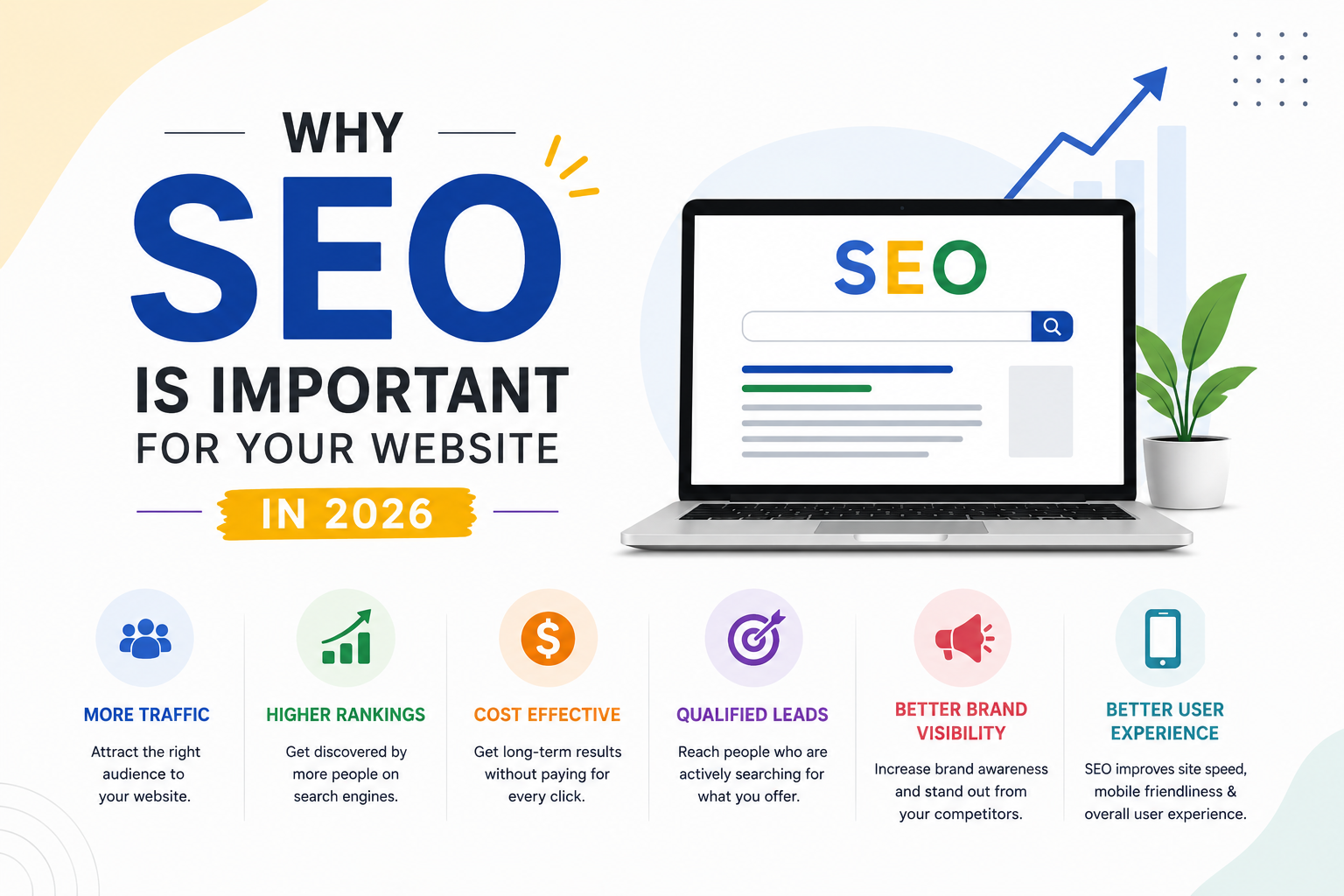
Why SEO Is Important for Your Website in 2026
Introduction
I've talked to a lot of business owners over the years, and there's one thing almost all of them get wrong at first—they think building a website is the finish line. It's not. It's barely the starting point.
You could pour weeks into design and copy, and if your site never shows up when someone searches for what you do, none of that effort matters. That's the whole point of SEO.
At its core, SEO means optimizing your website so search engines like Google Search Central can better understand your website and rank it higher in search results.
1. You Stop Paying for Every Single Visitor
Running paid ads can generate quick traffic, but the moment your advertising budget stops, so does your traffic. SEO works differently. Once your pages rank well, they continue bringing visitors without paying for every click.
Using tools like Google Analytics helps monitor your organic traffic and visitor behavior.
2. Higher Rankings Build Trust
People naturally trust websites that appear at the top of Google search results. A secure, mobile-friendly and fast-loading website improves both user trust and search engine rankings.
You can measure your website performance using Google PageSpeed Insights.
3. SEO and User Experience Go Together
Modern SEO focuses on creating useful content and providing an excellent user experience instead of simply repeating keywords.
- Fast loading pages
- Mobile-friendly design
- Easy navigation
- Helpful content
- Secure HTTPS website
Google officially recommends following these best practices through SEO Starter Guide .
4. SEO Is Cost Effective
Paid advertising delivers immediate traffic, while SEO builds long-term visibility. Although SEO requires patience, it often provides a much higher return on investment over time.
5. SEO Brings Qualified Visitors
Organic visitors usually arrive because they're actively searching for products or services you already offer, making them much more likely to become customers.
6. Your Competitors Are Already Investing in SEO
If your competitors are investing in SEO while you aren't, they'll continue attracting customers searching for your services.
You can analyze competitor rankings using tools like Ahrefs.
7. Local SEO Helps Nearby Customers Find You
Businesses like restaurants, clinics, gyms, salons, and retail stores benefit greatly from Local SEO.
Optimizing your Google Business Profile helps your business appear in local searches and Google Maps.
Conclusion
SEO isn't an overnight strategy, but it's one of the most valuable long-term investments you can make for your website. It builds trust, increases visibility, attracts qualified visitors, and delivers sustainable business growth.
Frequently Asked Questions
What is SEO?
SEO (Search Engine Optimization) is the process of improving your website so search engines rank it higher in organic search results.
How long does SEO take?
Most websites begin seeing measurable improvements within 3–6 months depending on competition and consistency.
Should I choose SEO or Google Ads?
Both work well together. Google Ads provide immediate traffic while SEO creates long-term organic visibility.
Is SEO important for small businesses?
Absolutely. Local SEO helps nearby customers discover your business when searching for products or services.
What are the main types of SEO?
- On-Page SEO
- Off-Page SEO
- Technical SEO
- Local SEO
Can I learn SEO myself?
Yes. Beginners can learn SEO through Google's free documentation and practice, while advanced SEO projects may require professional expertise.
Does SEO increase sales?
Yes. Since SEO attracts people actively searching for your products or services, it often leads to better conversion rates and long-term business growth.