Marketplace, Own Website or Both? How to Pick the Channel That Pays
Marketplaces bring buyers fast but take a cut and keep the customer; your own store gives control but needs traffic. Here is how to work out which pays you more.
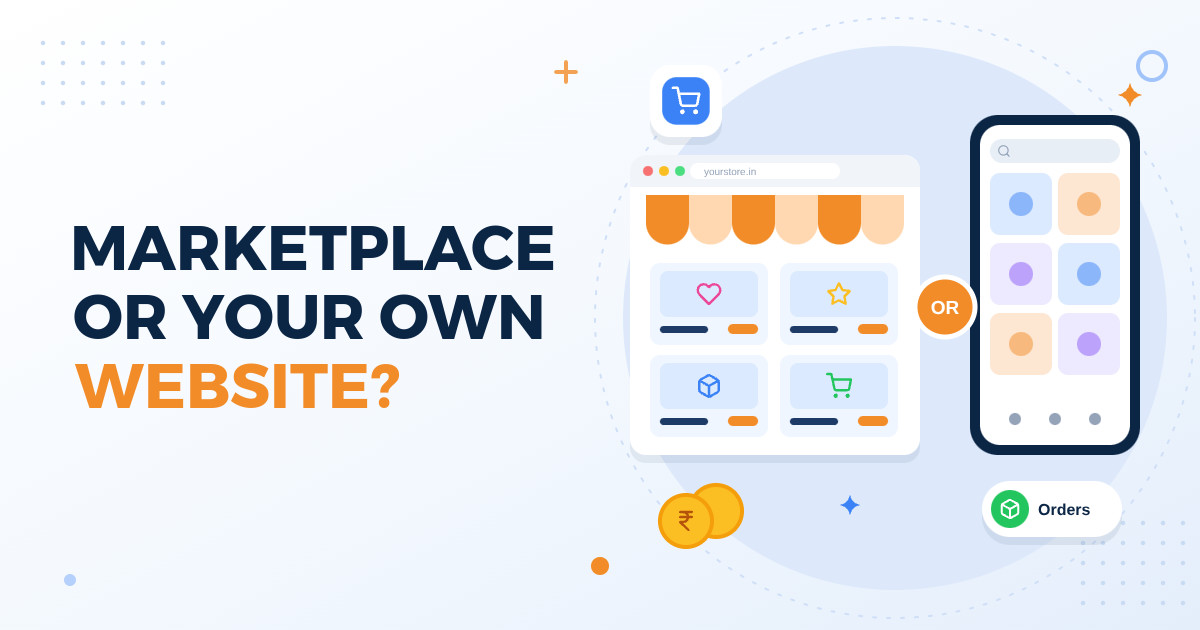
You make good products, whether Uppada sarees, home-made pickles, ayurvedic oils or spare parts, and customers keep asking, "Can we order online?" Then the advice starts. One relative says list everything on the big shopping apps. A friend says build your own website and never pay commission. Someone else says just take orders on WhatsApp. Each costs money and time differently.
This guide compares selling on marketplaces, running your own online store and doing both, judged on what matters most to a small business: control, fees, customer relationships and daily effort.
What marketplaces give you, and what they take
A marketplace is someone else's shop with huge footfall. Buyers already trust it and have its app, a saved address and a payment method ready. You list your products, and the platform brings shoppers, collects payment and often helps with delivery. For a new seller, that ready demand is the biggest advantage.
The trade-off: you are a tenant, not an owner. The platform sets and changes the rules, and your product sits next to competitors selling something similar for a little less.
- Fees on every order. Commission, fixed fees, shipping and payment charges, and sometimes paid ads to stay visible. Read the current rate card for your category before you list.
- Price pressure. Buyers compare side by side, so margins get squeezed, especially for products that look alike.
- Limited customer contact. You usually get what you need to ship the order, not a relationship you can build on.
- Rules you do not control. Returns, delivery timelines and ratings follow the platform's rules, and late shipments or poor reviews can push you down in search.
- Dependence. If your account is suspended or the rules change, much of your sales can stop overnight.
What your own online store gives you, and what it asks of you
Your own online store is your own shop on your own street. You decide the design, prices, offers, return policy and branding. There is no marketplace commission, though you still pay for building and maintaining the store, hosting, payment gateway charges and delivery.
The biggest asset is the customer relationship. Every order gives you a name, phone number, address and purchase history. With the buyer's permission, you can send a WhatsApp message when a favourite product is back in stock or offer a festival discount to past buyers. To see what that is worth, compare your ad spend to win one new buyer with the cost of reminding someone who already bought.
The catch is traffic. Nobody stumbles on a shop down a quiet lane. You have to bring people in through social media, search, ads, WhatsApp, your physical shop and word of mouth, which takes steady effort and budget.
- You handle more yourself: payments, packing, courier pickups, refunds and queries.
- Trust has to be earned. Clear photos, honest descriptions, visible contact details and a simple return policy reassure first-time buyers.
- The store must work well on phones and keep checkout short, or buyers leave halfway.
Compare the real cost per order, not just the fees
Many owners choose a website because "marketplaces take too much", then find that bringing visitors to their own site costs just as much. Others stay on marketplaces without noticing how little is left. The fair comparison is the total cost of one delivered order.
Take one typical product and work out both numbers on paper. For the marketplace, add up every deduction on a sample order using the platform's fee calculator or settlement report. For your own store, add your expected monthly spend on ads, the site, gateway charges and staff time, then divide by the orders you realistically expect. Compare what is left in rupees from each sale.
- Selling price minus product cost and packing.
- Platform deductions or payment gateway charges, depending on the channel.
- Delivery and return costs, including damaged returns.
- Marketing cost per order, meaning ad spend divided by orders.
- Your time, because packing and answering queries is real work.
Which path suits which business
There is no single right answer, but a few patterns help most owners decide where to start.
Service businesses face the same choice: clinics and real estate firms list on portals, and restaurants join delivery apps. These bring enquiries, but your own website and customer list are what you keep.
- Start on marketplaces if you sell things people already search for, such as phone accessories or household items, and have little time or budget to bring your own traffic. Use them to learn which products sell.
- Start with your own store if you already have loyal customers or a recognisable name, such as a Kakinada sweet shop whose regulars have moved to Hyderabad or Bengaluru, a boutique with a strong Instagram following or a shop selling something hard to find elsewhere.
- Do both if you have steady volume and someone who can manage two channels. Let marketplaces bring new buyers while your store serves repeat buyers with bundles or loyalty offers.
- Begin with WhatsApp and a simple catalogue if you only sell locally, like a bakery or grocery store serving nearby homes. A full store may be more than you need yet.
How to run both channels without chaos
Selling on both goes wrong when the two channels run like separate businesses.
- Keep one stock count. If an item sells out on the marketplace while your store still shows it in stock, you will take orders you cannot fill. Update stock daily or use one inventory system for both.
- Decide your pricing policy. Some sellers price slightly higher on marketplaces to cover fees; others keep prices equal and give direct buyers extra value. Check the platform's pricing policies first.
- Earn direct repeat buyers fairly. Good packaging, consistent quality and a memorable brand name make buyers search for you next time. Follow each marketplace's rules on contacting its customers, or risk suspension.
- Track each channel separately. Know monthly orders, returns and profit for each channel.
- Automate routine messages. Order confirmations, shipping updates and reorder reminders on your own channel can go out automatically.
Mistakes to avoid
Whichever path you choose, these errors cost small sellers the most.
- Building an expensive store before testing demand. Start with your best ten or twenty products.
- Launching a store and waiting for orders. Plan how visitors will reach it before you build it.
- Looking only at the headline commission. Read the full settlement to see what really reaches your bank account.
- Putting everything on one platform. Keep at least one channel you own so a single policy change cannot stop your sales.
- Poor photos and slow replies. Online buyers cannot touch the product, and a buyer left waiting a day often buys elsewhere.
- Skipping the paperwork. Selling online can bring tax, invoicing and registration requirements, so check with a qualified accountant before your first order.
Marketplaces are a fast way to reach buyers, and your own store is how you build something that belongs to you. For most small businesses the practical route is to start where effort and risk are lowest, measure the real profit per order, and add the other channel once you know what sells and who buys it.
If you want a second opinion on which path fits your products and budget, Knight21's small, senior team in Kakinada builds websites and helps online businesses with automation, digital marketing, GST registration, trademark registration and compliance. Tell us about your business at knight21.in/contact and we can talk it through.