What Is Funnel Marketing
Wondering what funnel marketing actually means? Here's a simple, honest breakdown of the marketing funnel stages, funnel types, and why it matters for your business.
What Is Funnel Marketing? A Complete Guide to Turning Prospects into Customers
Got asked this in a meeting last week. "What even is a marketing funnel? I keep hearing the term but nobody actually explains it." Fair enough, honestly. The word gets thrown around a lot without much behind it. So let's break down what funnel marketing really means, no jargon, just how the whole customer journey actually plays out.
What Funnel Marketing Actually Means
Basically, a marketing funnel is just a way of thinking through how a total stranger eventually becomes a paying customer. Nobody buys something the second they see it, not usually anyway. There's a whole customer journey happening in between, and funnel marketing is really just mapping that out so you're guiding people through it on purpose, instead of just hoping it works out somehow.
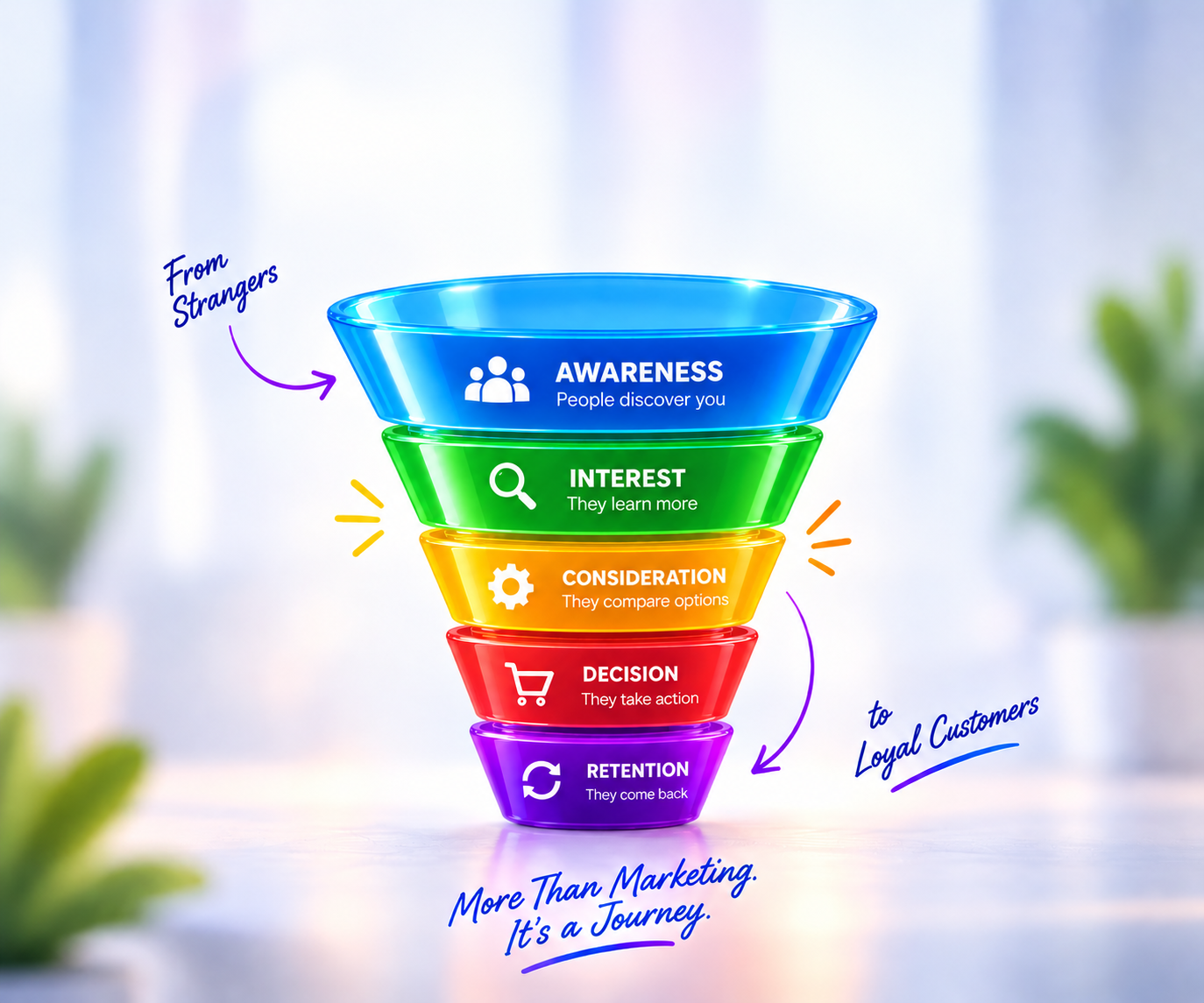
Think of an actual funnel shape, wide up top, narrow down at the bottom. Loads of people enter at the top, just becoming aware you're even out there. Fewer make it to the middle, actually considering buying something. And only a handful reach the bottom, where they finally become real, paying customers.
If you're also looking at ways to bring more visitors into your funnel, digital marketing can help attract potential customers through different online channels.
The Stages of a Marketing Funnel
Getting the funnel stages right is honestly most of the work, since each one needs a completely different approach.
1. Awareness
Top of the funnel, this is where people first find out you exist at all. Could be a random social post, a Google search, an ad, word of mouth, whatever. Most people here aren't ready to buy anything yet. They're just noticing you, that's it.
Creating useful and discoverable content is one way to improve visibility during this stage. You can learn more about content marketing strategies to attract people who are still discovering your brand.
2. Interest
Once someone knows you exist, a few of them stick around a bit. Maybe they follow your page, read something you posted, or poke around your website a little. Curious, sure, but not sold yet.
3. Consideration
Now they're comparing you to other options out there. Checking reviews, comparing prices, figuring out what makes you different from the next guy. Trust starts mattering a lot here.
This is also where a strong online presence can make a difference. Businesses often use SEO services to help potential customers find useful information when they're actively researching their options.
4. Decision
This is where someone actually pulls the trigger. Adds to cart, books a call, signs up for a trial, whatever the action is. That whole awareness, interest, decision flow was building toward exactly this moment.
5. Retention (People Forget This One)
Lots of people think the funnel just ends once someone buys. Big mistake, honestly. What happens after the sale matters just as much, maybe more. Good follow-up, decent support, staying in touch, that's what turns a one-time buyer into someone who keeps coming back.
You can also explore our marketing services to understand how different marketing activities can support customer acquisition and retention.
Types of Marketing Funnels
Not every funnel's built the same way. Different goals need different funnel types, and figuring out which fits your business actually helps a ton.
1. Sales Funnel
Most common one out there, a straightforward sales funnel meant purely to turn someone interested into someone who's bought. Usually moves from awareness straight to a purchase, often with some offer or discount nudging the decision along.
2. Lead Generation Funnel
A lead generation funnel is more about collecting info first, usually an email or number, before even asking for a sale. Free guide, webinar signup, discount code for your email, that kind of thing. The actual sale usually comes later through follow-ups.
3. Webinar Funnel
Popular with service businesses and course sellers. People join a free webinar, sit through genuinely useful content, then get pitched something paid near the end. Trust builds during the webinar itself, so the pitch doesn't feel as pushy.
4. Email Marketing Funnel
An email marketing funnel nurtures someone entirely through emails. Join a list, get a series of messages, some useful, some promotional, slowly moving from "just curious" to actually buying.
5. Content Marketing Funnel
A content marketing funnel runs on blog posts, videos, social content, not direct pitches at all. Someone finds something helpful, sticks around because it's actually useful, and slowly starts trusting the brand enough to consider buying.
6. Product Launch Funnel
Used when something new's coming out. Builds anticipation first, teasers, early access, that kind of thing, before opening sales for a short window. Creates urgency, which usually gets people deciding faster than they normally would.
Why This Whole Funnel Thing Actually Matters
Without some kind of marketing funnel in place, marketing tends to feel all over the place. Post here, run an ad there, hope something sticks eventually. Having a clear funnel just gives structure to all of it.
Stops You Wasting Effort on the Wrong Message
Someone who just found you isn't ready for a hard sell. Someone who's already compared you to competitors probably is. Mapping the journey means the right message hits the right person at the right moment.
Makes Marketing More Predictable
Instead of guessing, tracking each stage shows exactly where people drop off. Loads of ad views but nobody clicking through? Awareness problem. People visiting but never buying? Decision-stage problem.
Saves Money
Random marketing just burns budget testing blind. Focusing spend on what's actually working at each stage usually means better returns for the same money spent.
Builds Trust
People rarely buy from someone they just met, especially anything pricier or unfamiliar. Respecting that timeline works better than forcing an instant sale that was never happening anyway.
Keeps People Coming Back
Since retention's baked into a proper funnel too, businesses doing this right tend to hold onto customers longer instead of losing them right after that first purchase.
A Quick Example
Say you catch someone's eye with an Instagram reel, that's awareness. They click your profile, read a caption, that's interest. A few days later they read a blog comparing you to a competitor, that's consideration. Then they spot a limited-time discount and finally buy, that's the decision stage. Later you send a follow-up asking if they're happy with it, that's retention.
Nobody jumps straight from "never heard of this brand" to "buying right now," not usually anyway. The funnel's just everything happening in between those two points.
Mistakes Businesses Keep Making With Funnels
Biggest one, trying to sell way too early. Hitting someone with a hard offer the moment they discover you usually backfires since there's zero trust built yet.
Another one is ignoring retention completely, treating the sale like the finish line instead of where the actual relationship starts. And some businesses just have no structure at all, posting randomly with no thought about where their audience actually sits in the customer journey.
Conclusion
Funnel marketing really isn't some complicated thing only big companies get to use. It's just understanding that people need time, information, and trust before spending any money.
Awareness leads to interest, interest leads to consideration, and eventually, with the right nudge, consideration turns into an actual sale. Get the funnel stages and the right funnel type sorted, and marketing stops feeling random. Starts feeling like an actual path guiding someone from total stranger to loyal customer.
Frequently Asked Questions
What's the easiest way to explain a marketing funnel?
Just the journey someone takes from never having heard of your business to actually becoming a paying customer.
Which funnel type should a small business try first?
A basic sales funnel or lead generation funnel usually works fine to start. Both focus directly on turning interest into real customers.
Do small businesses even need a funnel?
Yeah, even a simple one helps. It means thinking about what someone needs to hear based on how familiar they already are with you.
What's the biggest mistake with funnels?
Selling too early before trust exists. Hitting someone with a hard offer right after they discover you usually doesn't land well.
Does the funnel stop once someone buys?
No, retention matters just as much. Keeping someone happy after the sale often brings repeat business and referrals.
How long does moving through a funnel usually take?
It varies a lot, from minutes to months, depending on price, trust needed, and how familiar someone already is with your brand.