What Is GEO Digital Marketing?
Wondering what GEO in digital marketing means? Here's an honest breakdown of Generative Engine Optimization and why it matters in 2026.
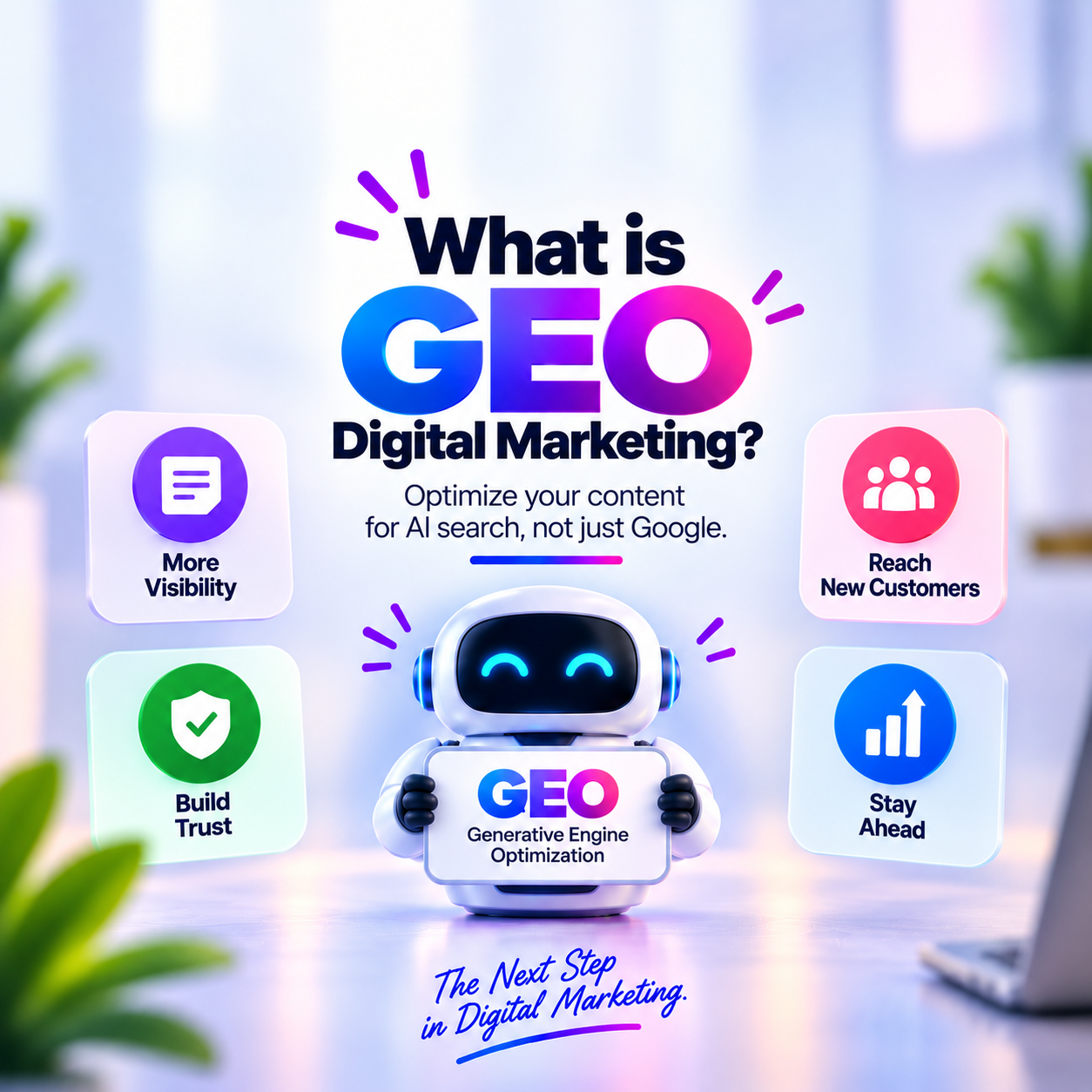
What Is GEO Digital Marketing? A Complete Guide
Client brought this up last week actually. "Everyone keeps talking about GEO now, is this just SEO wearing a new name, or is it genuinely different?" Good question, and I've been getting some version of it a lot lately. GEO's picked up steam fast, mostly because of how people search for stuff these days, and honestly, it's different enough from regular SEO that it's worth understanding properly instead of just filing it under "another buzzword."
What GEO Actually Means
GEO stands for Generative Engine Optimization. Instead of optimizing content so it ranks well on Google's results page, GEO is about making sure AI tools like ChatGPT, Gemini, or Google's AI Overviews actually pull your brand into their generated answers.
Think about how search has shifted lately. People used to type a question into Google, scroll through ten blue links, and pick one. Now a lot of folks just ask an AI assistant directly and get a summarized answer back, sometimes with a source mentioned, sometimes without. GEO's whole point is making sure that when an AI generates that answer, your business is actually one of the sources it pulled from.
If you're looking to strengthen your overall online presence, you can also explore Knight21's digital marketing services.
How GEO Differs From Regular SEO
Regular SEO is about ranking high in a list of links. GEO's about getting mentioned or cited inside an AI-generated response, where there's no list at all, just one answer sitting there.
That changes things more than people realize. With SEO you're fighting for visible positions in search results. With GEO you're competing to be one of the sources an AI model references out of hundreds of pages it could have pulled from instead.
SEO cares a lot about backlinks, keyword placement, and other ranking signals. GEO cares more about whether your content answers a question clearly, whether it sounds trustworthy, and whether an AI can pull a clean fact out of your page without needing to guess at what you meant.
If you want to improve your traditional search visibility alongside GEO, learn more about SEO services and how they can support your online growth.
Why This Actually Matters Right Now
More people are skipping search entirely and just asking a chatbot instead. If your business only shows up on Google's blue links but never gets mentioned inside an AI answer, you're missing a growing chunk of how people find things now.
There's a trust angle too, honestly. When an AI cites your business, it kind of carries weight, since the AI picked your content over everyone else's to actually answer that question. That's different from just ranking on a page somewhere.
How to Actually Optimize for This
Write answers that are clear and direct. AI models tend to pull stuff that's stated plainly, not buried under three paragraphs of fluff before getting to the point. Someone asks "best time to post on Instagram," a straight answer beats a long buildup every time.
Structure things logically too. Headings, bullet points, and clearly separated sections make it easier for an AI to grab a specific piece of information without getting confused.
Back claims up with actual data where you can. AI tends to favor stuff that sounds credible and supported, not vague opinions floating with nothing behind them.
Keep things updated. Old, outdated content is less likely to get pulled in, especially for anything time-sensitive like pricing or statistics.
And just answer the actual question being asked. Sounds obvious, but a ton of content wanders around a topic without ever directly answering what someone would type into a chatbot. GEO rewards stuff that gets to the point fast.
Does This Mean SEO's Dead Now?
Not really, no. Regular search isn't going anywhere soon, and plenty of people still Google things the old way. GEO isn't replacing SEO, it's sitting right next to it.
Smart move is treating both as related goals rather than picking a side. Good SEO habits, clear structure, and quality content actually help with GEO too, so there's already a good amount of overlap between the two.
Businesses looking to build a complete online growth strategy can combine digital marketing with SEO, Google Ads, Meta Ads, and other digital channels.
Conclusion
GEO's basically the natural next step as more people shift from typing into Google to just asking an AI assistant directly. It's not about throwing out everything you know about SEO, it's about tweaking content so it's just as useful to an AI summarizing an answer as it is to a person scrolling through search results.
Businesses getting ahead of this now are going to have a real edge as AI search keeps growing.
Frequently Asked Questions
What does GEO mean in digital marketing?
GEO stands for Generative Engine Optimization, basically optimizing content so AI tools like ChatGPT or Gemini pull it into their generated answers.
Is GEO just SEO with a new name?
No, though they're related. SEO focuses on ranking in search results, while GEO focuses on getting cited inside AI-generated answers.
Do I have to pick between SEO and GEO?
No, they work fine together. Good SEO habits like clear structure and solid content can help with GEO too.
Why does GEO matter now specifically?
More people are asking AI chatbots instead of scrolling search results, so showing up inside those AI answers matters more than before.
How do I start optimizing for GEO?
Write direct answers, structure content clearly, keep information updated, and back things up with real data where possible.
Want to improve your online visibility? Explore Knight21's digital marketing and SEO services to build a stronger digital presence.